

AI and Data Centers Are Reshaping the Construction Industry: What to Expect at World of Concrete 2027 in Las Vegas
[Daily News | Las Vegas - Edward Ko and Han Im]
The convergence of artificial intelligence, data center expansion, advanced building materials, and smart construction technologies is transforming how buildings are designed, engineered, constructed, and operated.
The construction industry is entering a significant period of transformation as artificial intelligence (AI), cloud computing, and data center infrastructure drive new demands for buildings, materials, engineering, and construction services. What was traditionally an industry focused on physical structures, labor, equipment, and materials is increasingly becoming a technology-driven sector where digital intelligence, automation, energy efficiency, and infrastructure innovation play critical roles.
This transformation will be an important industry theme surrounding World of Concrete 2027, scheduled for January 19–21, 2027, at the Las Vegas Convention Center, with educational programs beginning January 18.
Although concrete and traditional building materials remain fundamental to construction, the growing demand for AI computing infrastructure is creating new requirements that extend far beyond conventional building methods. Data centers, in particular, are becoming one of the most important drivers of change across the construction and building design industries.
1. AI Is Changing How Construction Projects Are Designed and Managed
Artificial intelligence is becoming an important tool throughout the construction lifecycle, from initial architectural planning and engineering to project execution and building maintenance.
Traditionally, construction projects have relied heavily on manual estimates, engineering calculations, project schedules, and coordination among architects, engineers, contractors, and suppliers. AI-powered platforms are beginning to improve these processes by analyzing large volumes of project data, identifying potential design conflicts, forecasting costs, and helping project managers make better decisions.
Several areas are particularly important:
- AI-powered architectural design: Generative design tools can evaluate multiple building configurations based on construction costs, structural requirements, energy efficiency, and available space.
- Predictive project management: AI can analyze schedules, labor availability, material costs, and weather conditions to identify potential delays and budget overruns.
- Construction automation: Robotics, autonomous equipment, and AI-assisted machinery can improve productivity and reduce repetitive manual work.
- Digital twins and BIM: Building Information Modeling (BIM) and digital twin technologies allow project teams to create digital representations of buildings and infrastructure, helping identify problems before construction begins.
- Safety and quality control: Computer vision and AI-assisted monitoring can identify unsafe working conditions, equipment risks, and potential construction defects.
These technologies are changing the competitive landscape for construction companies. Businesses that successfully integrate digital tools into their operations may gain advantages in productivity, project delivery, cost management, and quality control.
2. The Data Center Boom Is Creating a New Construction Market
One of the most significant forces influencing the construction industry is the rapid expansion of data centers.
The growth of generative AI, cloud computing, enterprise AI applications, and high-performance computing is creating demand for facilities capable of supporting increasingly powerful computing infrastructure.
Unlike conventional office buildings or commercial properties, data centers require specialized construction and engineering systems, including:
- High-capacity electrical infrastructure and backup power systems.
- Advanced heating, ventilation, and air conditioning (HVAC).
- Liquid cooling and specialized thermal management.
- Heavy-duty structural floors and equipment foundations.
- Fire suppression and advanced security systems.
- Fiber-optic connectivity and telecommunications infrastructure.
- Reliable water, energy, and environmental management systems.
AI computing equipment generates substantial heat and requires significantly more sophisticated cooling and electrical systems than many traditional commercial buildings.
As computing density increases, architects and engineers must reconsider conventional building designs. Structural loading, equipment layouts, cooling systems, and electrical distribution must be coordinated from the earliest stages of planning.
Building Design + Construction+1
The data center expansion is also creating opportunities for companies that traditionally may not have considered themselves part of the technology industry. Concrete producers, steel manufacturers, electrical contractors, HVAC companies, construction equipment suppliers, and building-material manufacturers are becoming important participants in this growing market.
According to Reuters' August 2026 reporting, AI-driven data center demand is benefiting manufacturers across construction equipment, steel, cables, pipes, cement, and building materials.
3. Concrete and Building Materials Are Becoming More Specialized
The expansion of data centers and advanced industrial facilities is creating new requirements for concrete and building materials.
Concrete remains one of the most essential materials in modern infrastructure. However, the industry's competitive advantage increasingly depends on developing materials that offer better performance, durability, construction speed, and environmental efficiency.
Several areas deserve attention:
High-performance concrete: Data centers and industrial facilities often require substantial foundations and structural systems to support heavy equipment. High-strength and specialized concrete mixtures can help meet demanding engineering requirements.
Precast and modular concrete: Factory-produced concrete components can reduce on-site construction time, improve quality control, and support standardized building designs.
Low-carbon concrete: New cement formulations, supplementary cementitious materials, carbon-reduction technologies, and alternative production processes are becoming increasingly important as developers evaluate the environmental impact of construction.
Advanced construction materials: Innovative insulation, smart building envelopes, fire-resistant materials, and energy-efficient structural systems can improve building performance and operating efficiency.
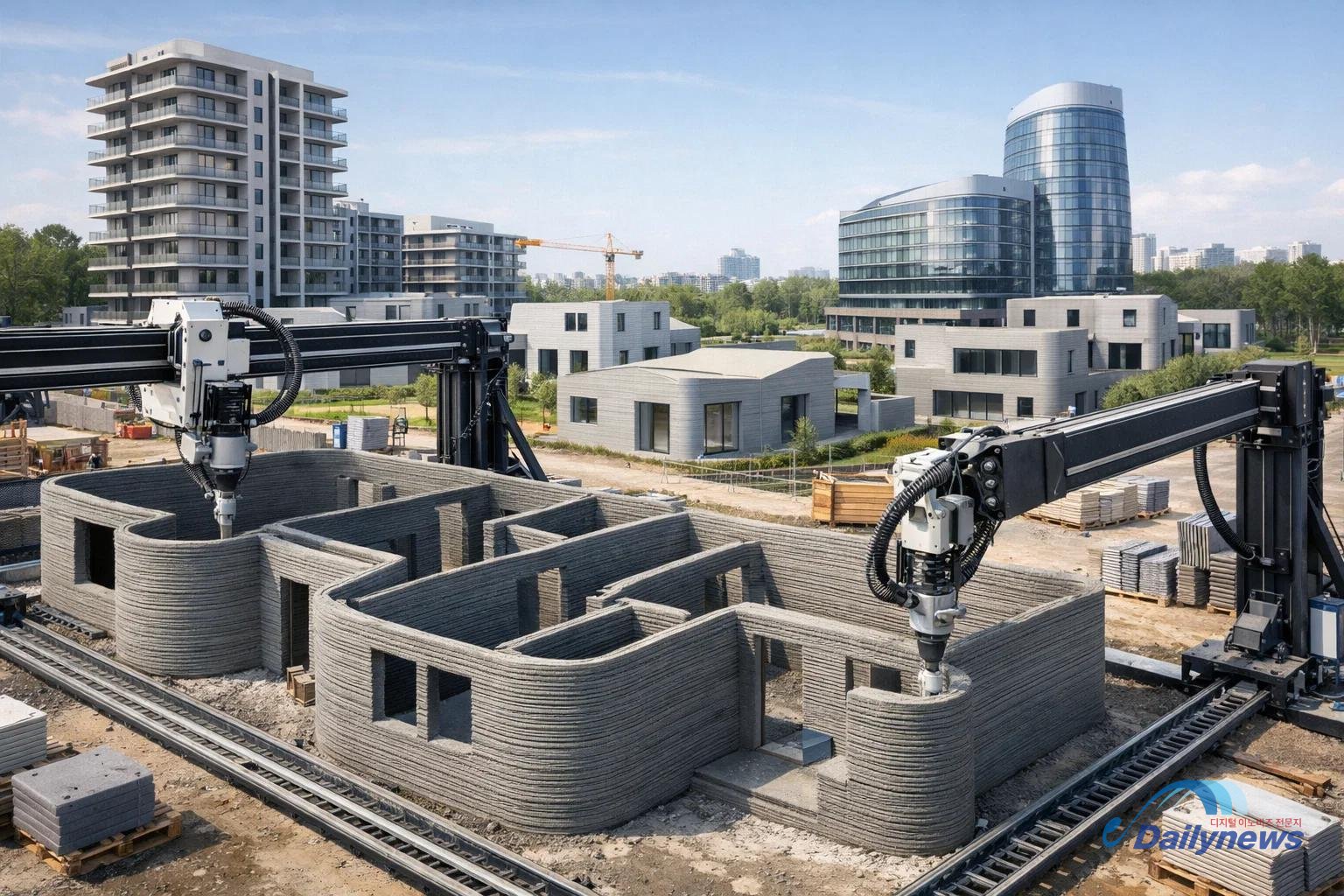
3D concrete printing: Robotic concrete printing offers the potential to automate portions of construction, reduce material waste, and create complex structural designs.
These developments are particularly relevant as developers seek to build large industrial facilities and data centers on increasingly demanding schedules.
4. Modular Construction and Automation May Accelerate Data Center Development
Time is becoming a critical competitive factor in data center development. Delays in completing facilities can affect the ability of technology companies to deploy computing capacity and generate revenue.
As a result, developers and contractors are increasingly interested in modular construction and prefabrication.
Instead of building every component at the construction site, companies can manufacture electrical rooms, mechanical systems, cooling modules, structural components, and other building systems in controlled factory environments.
This approach can offer several advantages:
- Shorter construction schedules.
- More consistent manufacturing quality.
- Reduced dependence on on-site labor availability.
- Better coordination between engineering and construction teams.
- Greater standardization across multiple facilities.
AI-assisted project scheduling, digital construction models, and automated equipment can further improve coordination between manufacturers, engineers, and contractors.
However, modular construction also requires careful planning, transportation logistics, standardized engineering, and coordination among multiple suppliers. It is not a universal solution for every project.
5. Energy Efficiency and Infrastructure Are Becoming Major Challenges
While AI and data centers are creating substantial investment opportunities, they are also introducing challenges for the construction and real estate industries.
One of the biggest concerns is electricity availability.
Large AI data centers require significant and reliable power capacity. Developers must consider access to electrical grids, substations, transformers, backup generators, and potentially alternative energy sources before selecting development sites.
Cooling and water consumption are also important considerations. Depending on the cooling technology and location, data centers can place significant demands on local water resources and energy infrastructure.
These requirements affect real estate investment decisions. A property that appears attractive based on location and land cost may not be suitable for data center development if it lacks sufficient electrical capacity, fiber connectivity, water resources, or the necessary zoning and permitting approvals.
For commercial real estate developers, this represents a major change in how property value and development potential are evaluated.
Traditional commercial real estate metrics such as location, rental income, building size, and occupancy remain important. However, infrastructure availability, power access, connectivity, and technology readiness are becoming increasingly influential in determining the value of certain industrial and commercial properties.
The opportunity is substantial, but developers must carefully evaluate capital requirements, utility availability, environmental considerations, and the long-term demand for computing infrastructure.
6. What to Watch at World of Concrete 2027
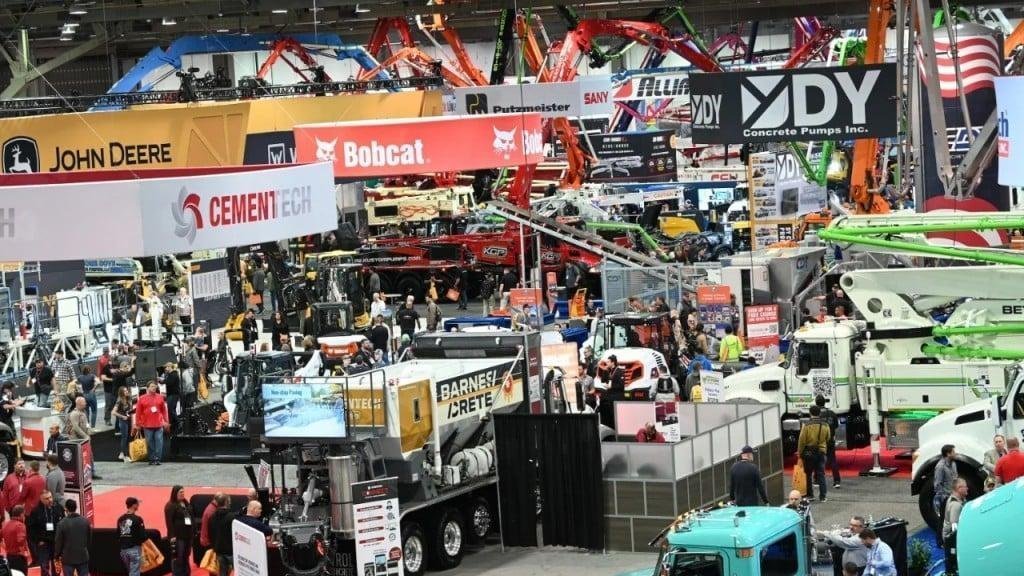
The World of Concrete is one of the most important annual international events dedicated to commercial concrete and masonry construction.
The 2027 exhibition will take place January 19–21, with educational programs running January 18–21 at the Las Vegas Convention Center.
The 2027 event is particularly relevant because its exhibition areas include construction technology and robotics, precast concrete, material handling, concrete production, reinforcement, and other construction innovations.
The published program also identifies AI and 3D construction printing among its emerging industry topics.
For investors, developers, architects, engineers, and construction industry executives, several areas deserve particular attention.
| Industry area | Technologies and opportunities |
|---|---|
| AI construction software | Project management, cost estimation, predictive analytics |
| Robotics and automation | Autonomous equipment, robotic construction |
| Concrete innovation | High-performance and low-carbon concrete |
| Precast construction | Modular and prefabricated building systems |
| Data center infrastructure | Foundations, cooling, electrical and structural systems |
| Smart buildings | AI-enabled building management and energy optimization |
| 3D construction | Automated concrete printing and advanced fabrication |
The exhibition also offers an opportunity to evaluate manufacturers and technology companies developing products that could become important suppliers to the expanding data center and industrial construction markets.
7. Investment Opportunities: Connecting Construction, Technology, and Real Estate
From an investment perspective, the convergence of AI, data centers, and construction creates opportunities across multiple industries.
The most interesting opportunities may not necessarily be limited to companies developing AI software or operating data centers. Many businesses supplying the physical infrastructure that makes AI computing possible may also benefit.
Potential investment sectors include:
- Data center construction and development: Companies specializing in site development, structural engineering, and large-scale industrial construction.
- Advanced building materials: Manufacturers of high-performance concrete, sustainable cement, insulation, and advanced building envelopes.
- Power and energy infrastructure: Companies developing transformers, power distribution systems, backup power, and energy storage.
- Cooling technologies: Businesses specializing in liquid cooling, HVAC, and thermal management.
- Construction technology: AI software, robotics, digital twins, BIM, and automated construction equipment.
- Modular building solutions: Companies producing prefabricated structural, electrical, and mechanical systems.
For venture capital firms, private equity investors, and strategic investors, identifying innovative companies in these sectors may create opportunities to participate in the next generation of industrial and technology infrastructure development.
However, investors should distinguish between companies with proven commercial demand and those whose business models depend primarily on projected data center expansion. Capital requirements, customer concentration, competition, and infrastructure constraints all deserve careful evaluation.
8. The Future of Construction: A Technology-Driven Industry
The construction industry is moving beyond traditional building methods toward an integrated model combining physical infrastructure, digital engineering, automation, and intelligent building systems.
AI will not replace the need for architects, engineers, construction professionals, or skilled tradespeople. Instead, it will change how they work, the skills they need, and the types of projects they can deliver.
Companies that successfully combine construction expertise with advanced technology may gain significant competitive advantages.
At the same time, the industry must address challenges involving skilled labor shortages, rising construction costs, energy availability, environmental regulations, and the substantial capital investment required for advanced infrastructure.
The future winners will likely be organizations that can combine innovation with practical execution, financial discipline, and long-term strategic planning.
Conclusion: World of Concrete 2027 as a Window into the Future
World of Concrete 2027 provides an important opportunity to examine how traditional construction industries are evolving in response to AI, data center expansion, automation, and advanced building technologies.
The transformation is bigger than the construction of data centers. It represents a fundamental shift in how commercial buildings, industrial facilities, infrastructure, and real estate assets are designed, financed, constructed, and operated.
For St. Louis and other U.S. metropolitan regions, these changes also present opportunities to attract technology investment, develop advanced industrial infrastructure, create skilled employment, and strengthen regional economic competitiveness.
As AI continues to reshape the global economy, the construction industry will remain a fundamental part of the physical infrastructure supporting the digital economy.
The next generation of construction leaders will not simply be those who build faster or at lower cost. They will be those who understand how to integrate technology, engineering, materials, energy, and investment to build the infrastructure of tomorrow.
Daily News | Industry & Investment Coverage
Daily News covers business, technology, investment, international trade, and economic development, reporting on developments that influence global markets.
Editorial Disclaimer: This article is intended for general informational and educational purposes. Industry projections, investment opportunities, and technology developments should be independently evaluated. Daily News and the author make no guarantees regarding business or investment outcomes and assume no responsibility for decisions made based on the information presented.
Article byline:
Edward Ko and Han Im, Reporter, Daily News


댓글
0